My role 💁🏽♀️
Product Designer, UX-UI.
As part of a design workshop, we worked on the creation of a business application aimed at improving an existing internal process. The project was conducted using a Design Sprint, a collaborative method that allows teams to explore a problem, design a solution, and test it quickly with users. Over the course of two weeks, our team followed several design thinking steps, from understanding the problem to building and testing an interactive prototype.

Product Designer, UX-UI.
2 weeks
I participated in the design workshops and contributed to several phases of the sprint, including user research, ideation, user journey design, and prototyping. I was particularly involved in creating sketches, structuring the user flow, and building the prototype in Figma.
The first phase of the sprint focused on understanding the context and the users. Through a series of workshops, we defined personas, interviewed domain experts, and formulated key questions that the solution needed to address.
We then created a user journey map to visualize the main steps of the process and identify potential friction points.
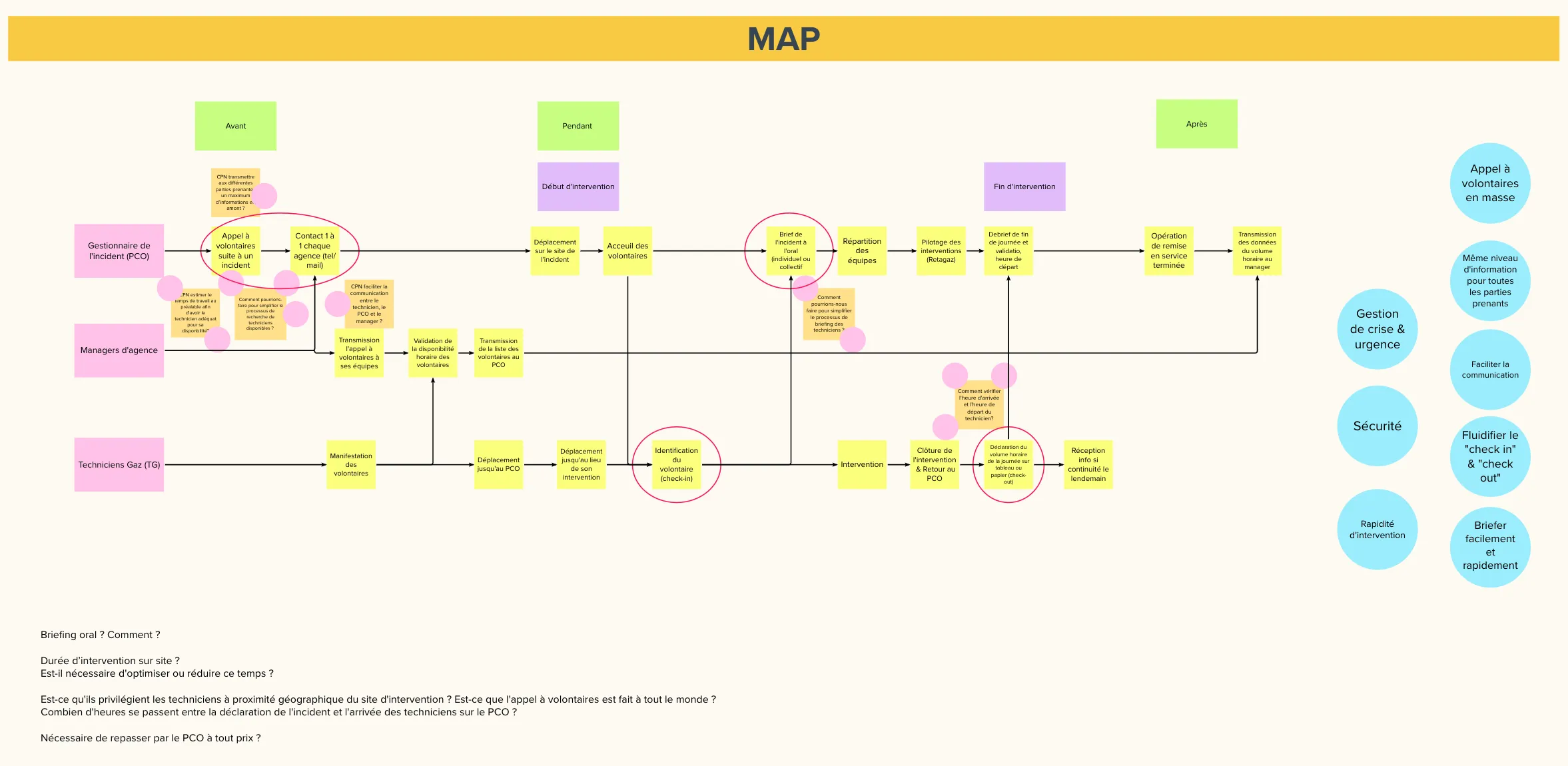
Mapping user flow.
Once the problem was clearly defined, the team explored multiple solution ideas. Each participant first worked individually, producing quick sketches and concepts, including through the Crazy 8 exercise, which encourages generating several variations of an idea in a short amount of time.
These proposals were then shared and discussed with the group to identify the most promising concepts.
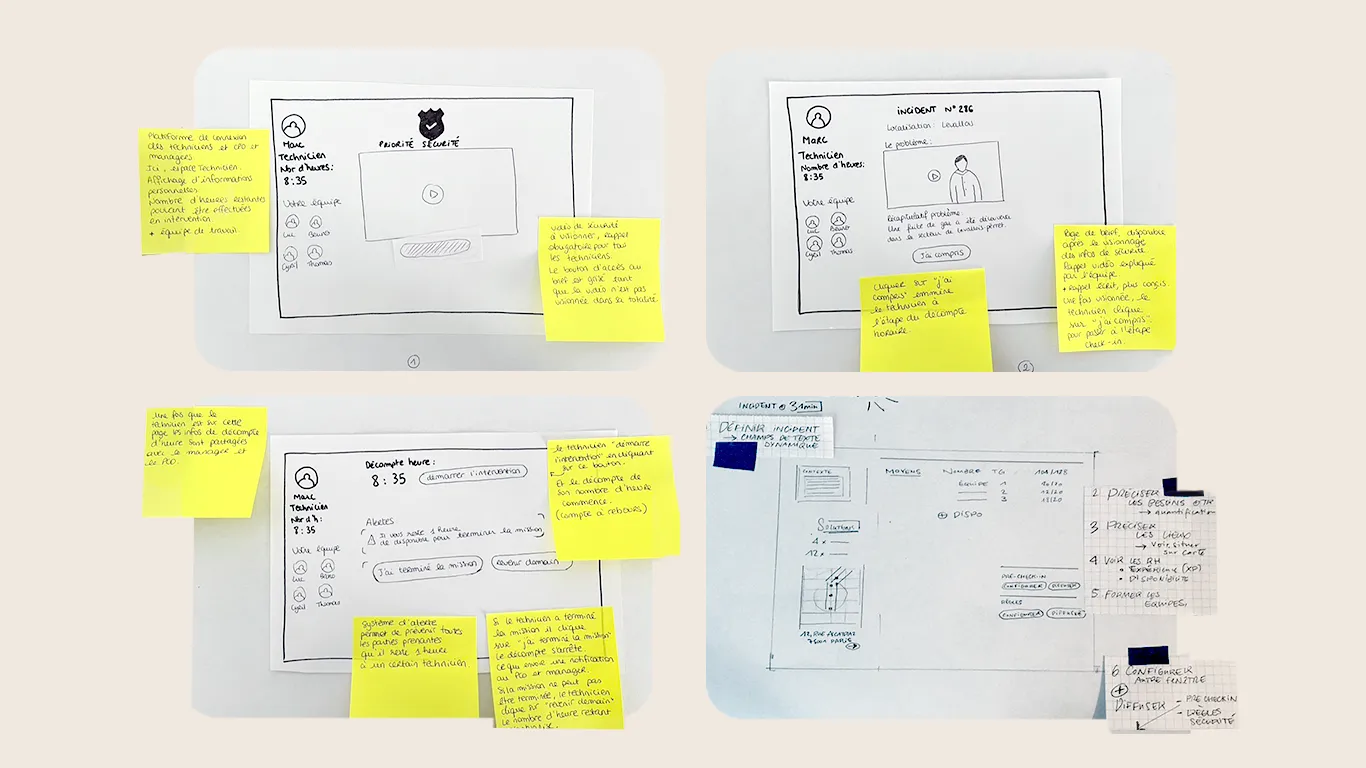
Explorations sketches
Based on the selected concept, we defined a user flow describing the key steps of the user journey. This helped us create a storyboard illustrating the future experience and the main interactions within the application.
This step served as the foundation for building the prototype.
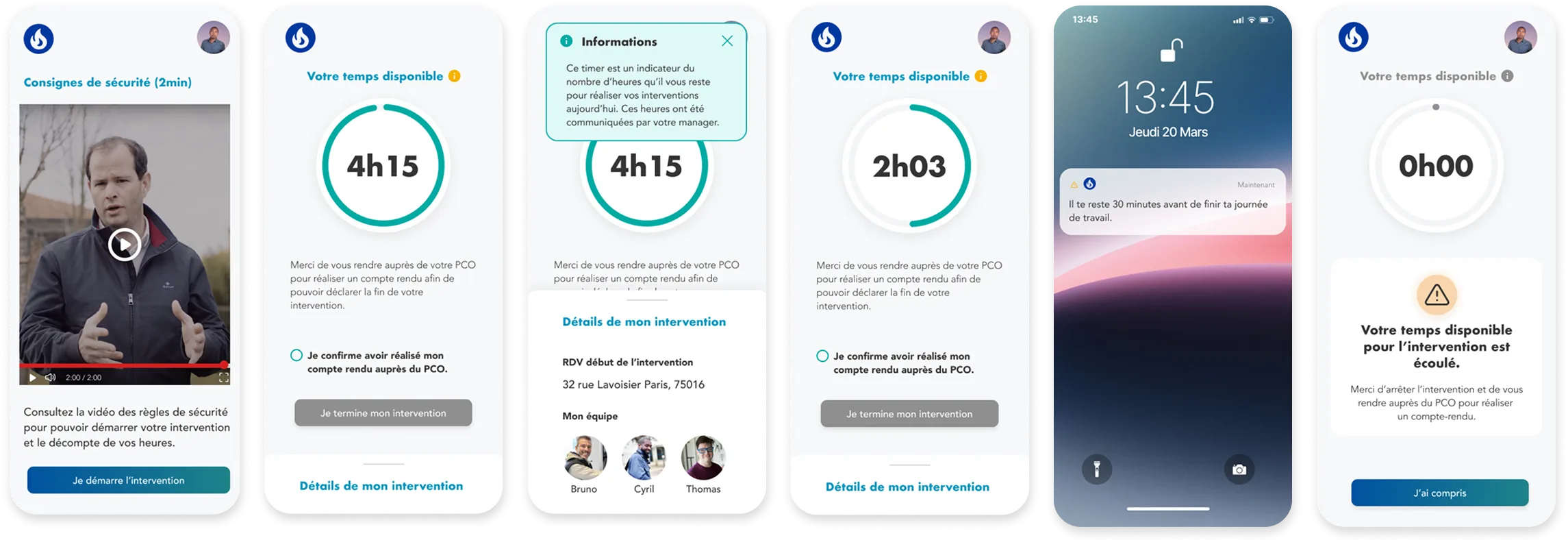
Application for field responders
We then designed an interactive prototype in Figma to simulate how the application would work. The goal was to produce a realistic enough version to allow users to test the main features and provide feedback on the experience.
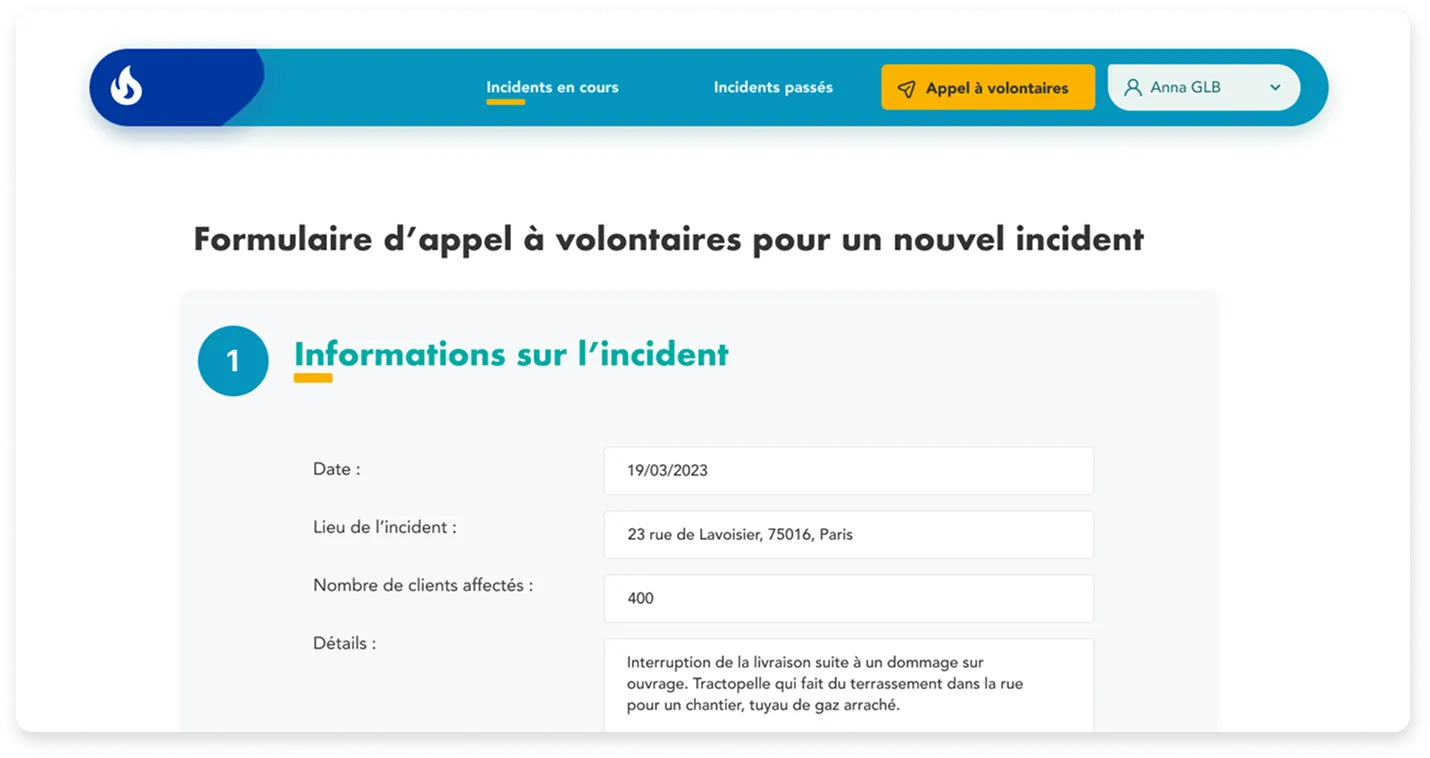
Form for reporting an incident
The prototype was tested during user interviews. These sessions allowed us to observe user interactions, identify possible misunderstandings, and collect qualitative feedback about the overall experience.
The insights gathered during these tests helped us identify key improvements for the prototype.
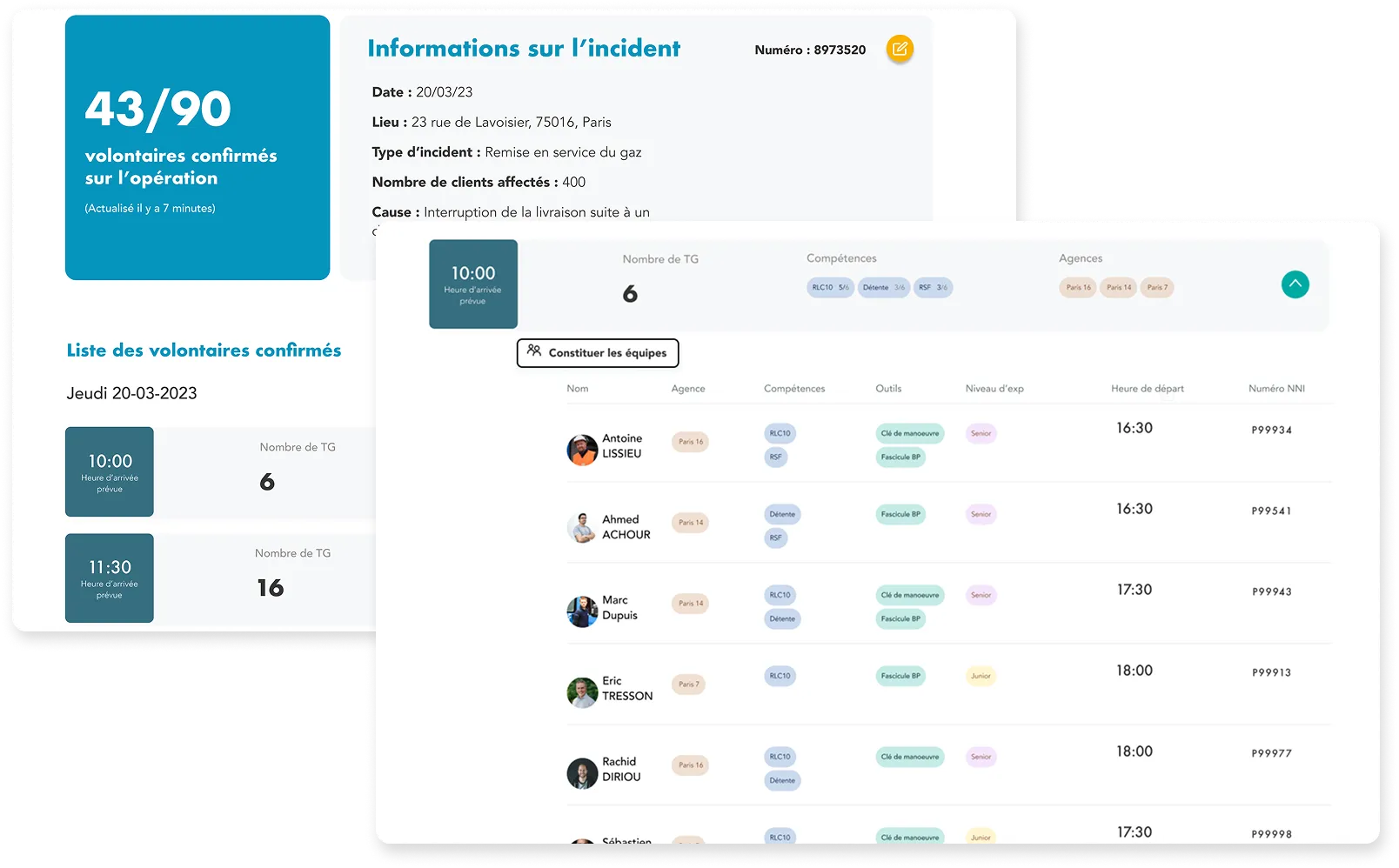
List of volunteers available to handle incidents
This sprint enabled us to rapidly transform a complex problem into a concrete solution that was tested with users.
The feedback obtained allowed us to validate key hypotheses and identify several areas for improvement for the next phase of the project.